Main Program
14-16 October 2026 | Melbourne Convention & Exhibition Centre
Browse the program and start planning your CyberCon 2026 experience across three days of keynotes, panels, workshops, and more.
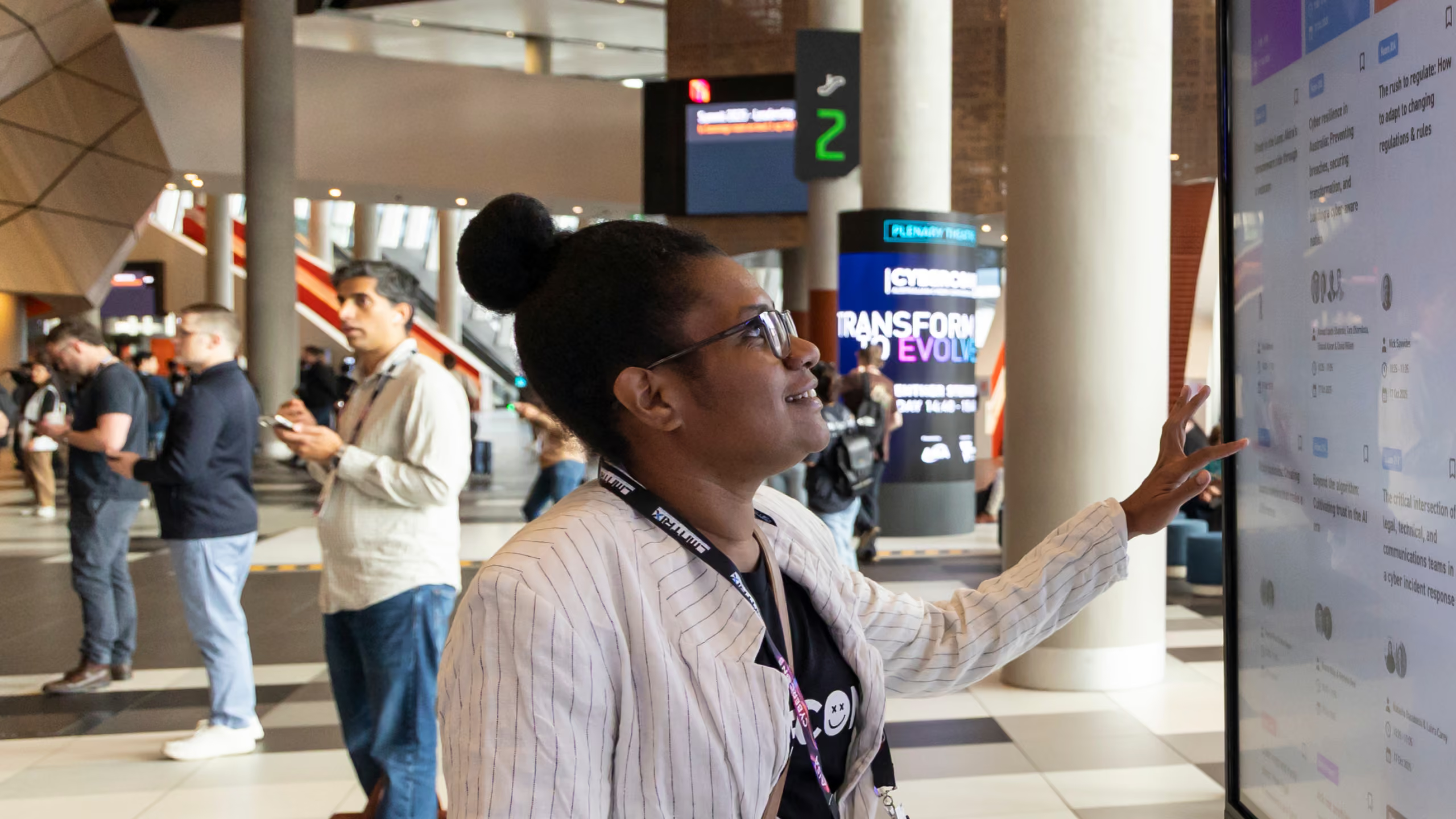
Results 1
Showing1 to 3 of 6
Learning from the wreckage: Post incident analysis of cyber attacks on critical infrastructure


Lessons from Colonial Pipeline, Oldsmar, and other landmark OT attacks build a practical post-incident framework for Australian critical infrastructure.
From visibility to action: Operationalising a continuous exposure management model

Most organisations already own the tools for continuous threat exposure management; this session explains the structures needed to make them work.
The AI assurance gaps nobody is talking about

Enterprise AI governance is maturing, but independent assurance for what deployed models and autonomous agents actually do in practice barely exists yet.
A practical look at whether ChatGPT, Claude, and Gemini are actually useful in a cyber security data breach investigation

A head-to-head test of leading AI models against real DFIR tasks reveals where each genuinely saves time and where it confidently misleads investigators.
The AI data centre, securing the physical foundation of the Australian AI boom

Australia's AI data centre boom creates critical infrastructure risk most cyber security conversations still stop short of, from OT convergence to supply chain.
CMMC 2.0: A strategic governance imperative for Australian defence contractors in the AUKUS era


CMMC 2.0 is now contractually enforceable, and Australian defence contractors relying only on DISP and the Essential Eight face a real compliance gap.
Secure by design doesn't mean secure by default

A scan of 250 Australian Salesforce Experience Cloud sites found 56% exposing sensitive data, showing SaaS risk sits in configuration, not vendor code.
Tracking third-party data theft across the dark web

Dark web research into ransomware groups reveals how stolen data cascades through supply chains, leaving third parties unaware their information was exposed.
Cyber awareness isn’t boring - we just designed it that way

Cyber awareness, but make it interesting: what Star Wars, Dora, scams and coffee taught me about engaging people at ANU.
Ask me about running secure operations or leadership, governance and accountability

For running secure operations or leadership, governance and accountability, the expert at 2.30pm Wednesday is Model Security CEO Jacqui Kernot.
Rethinking security for agentic AI: from control to orchestration
Data becomes the control surface once agents hold broad access to identities and business processes, and it converges with outbound actions at machine speed.
Afternoon Tea
The Data Is the Target: What 177 DFIR Investigations Reveal About Identity, AI and Speed
Findings from 177 incident investigations show identity is the common way in, through unsecured VPN and RDP access or stolen session tokens that get past MFA.
Empowered together: Redefining how security operations teams see, respond and prevail
Alert triage by hand, with no dark web or attack surface context, is the gap, and the fix offered is a four-level threat intelligence maturity framework.
The human firewall: How to ace your next interview


Hiring decisions turn on trust and communication as much as technical skill, Ben Rogalsky and Jacob Bywater argue, likening interviews to social engineering.
Fighting fire with fire: Securing the AI DevSecOps factory

As AI accelerates code production, this talk maps where it strengthens DevSecOps and where it exposes weak points in trust and review quality.
Re-engineering supply chain risk management: From compliance engine to risk-adaptive control

Compliance-driven supply chain reviews can mask real service-level exposure, and this session outlines a shift toward risk-adaptive vendor oversight.
From classroom to consulting: A student’s first year inside the cyber industry

A student reflects on the gap between university's technical framing of cyber security and the organisational reality of a first year as a security analyst.
Understanding and protecting the data you hold: Industry data classification framework


A session on a voluntary, non-regulatory framework whose data security levels label data by risk and handling needs, so protection stays proportionate.
Where should AI be refused? Human limits, cyber risk, and the boundaries of automation


Automation in cyber security can erode judgement and obscure accountability, and this panel debates when AI use should be constrained or refused.
What 7,500 penetration tests tell us about the state of cyber security in Australia & NZ

Three years of penetration testing data across Australia and New Zealand reveal which vulnerabilities are worsening and where security investment pays off.
Find my... and yours: Exploiting tracker ecosystems to track individuals

Passive Bluetooth tracking data can defeat the rotating identifiers meant to protect privacy, re-identifying devices and reconstructing movement histories.
The invisible attack surface: Disinformation as the most pressing security threat

National survey data shows Australians rate disinformation a bigger threat than foreign military attack, and this briefing sets out what teams should do now.
Don't be the last to know: Threat intelligence for supply chain defence

Third-party breaches are rising fast, and this session sets out a low-cost threat intelligence model for spotting supply chain compromise before it reaches you.
Secure your place at CyberCon 2026
Join thousands of cyber security professionals in Melbourne this October.